The 10 Editors and AI Coding Tools
How AI changed the way we code
The way we write code changed. Editors no longer just colour your syntax and finish a function name. The best ones now read your whole project, suggest edits across files, and run as agents that complete tasks while you review the result.
This guide ranks the editors and AI coding tools worth using in 2026. Some are classics that added AI on top. Others were built around it from the first line. The right pick depends on how much of the work you want to hand to the machine, and how much you want to keep in your own hands.
Whichever you choose, the source code stays the most valuable part of what you build. Tools like View Page Source help you read and check the end result. A good editor is where you create it.
1. Visual Studio Code

Visual Studio Code is still the editor most developers reach for, and the base the AI wave was built on. With GitHub Copilot turned on, it suggests code as you type, answers questions about your project in chat, and runs an agent mode that edits files and runs terminal commands for you. Cursor and Devin Desktop (formerly Windsurf) both started as forks of it, which tells you how strong the foundation is. It stays free, fast enough for daily work, and extensible through a huge library of extensions.
Features:
- Price: Free; GitHub Copilot from $10/month
- Compatibility: Windows, Linux, macOS
Pros:
- Massive extension ecosystem.
- Copilot brings chat and agent mode into the editor.
- Cross-platform and free.
- Familiar to almost everyone on a team.
Cons:
- Memory use climbs on large projects.
- The best AI features need a paid Copilot plan.
2. Cursor

Cursor is the editor that pushed AI coding into the mainstream. It is a fork of VS Code, so your extensions, themes, and keybindings carry over, but the AI sits at the center instead of bolted on the side. Its agent can plan a change, edit files across the whole project, run commands, then show you a diff to accept or reject. Developers pick it for the tight loop between asking for a change and watching it land.
Features:
- Price: Free tier; Pro around $20/month
- Compatibility: Windows, Linux, macOS
Pros:
- Strong agent mode for multi-file edits.
- VS Code compatible, so switching is easy.
- Fast inline edits with good project context.
Cons:
- Heavy use needs a subscription.
- The agent can over-reach on big changes.
3. Devin Desktop (formerly Windsurf)

Devin Desktop is the editor you knew as Windsurf. Cognition rebranded it and shifted the focus from a code-first editor to an agent command center, where you plan, delegate, review, and ship work across local and cloud agents. Your existing plans, extensions, and keybindings carry over automatically. The old Cascade agent has been replaced by Devin Local, rewritten in Rust, with sub-agent support and better token efficiency, and you can hand a task to Devin's cloud agent when you want it to run in its own environment.
Features:
- Price: Free tier; paid plans from around $15/month
- Compatibility: Windows, Linux, macOS
Pros:
- Agent command center for local and cloud agents.
- Devin Local is fast and token-efficient, with sub-agents.
- Hand tasks off to Devin's autonomous cloud agent.
Cons:
- Less of a plain editor now; built around agents.
- Cascade is retired, so automation that called it must move to Devin Local.
4. Zed

Zed is a high-speed editor written in Rust by the team that first built Atom. It opens instantly, stays light on memory, and barely touches your battery. Recent versions added AI chat and an agentic editing mode, plus real-time collaboration for pair programming. If raw speed matters and you want AI without the weight of an Electron app, Zed is the one to watch.
Features:
- Price: Free
- Compatibility: macOS, Linux; Windows in progress
Pros:
- Very fast and lightweight.
- Built-in real-time collaboration.
- A native app, not Electron.
Cons:
- Windows support is still maturing.
- Smaller extension set than VS Code.
5. Claude Code

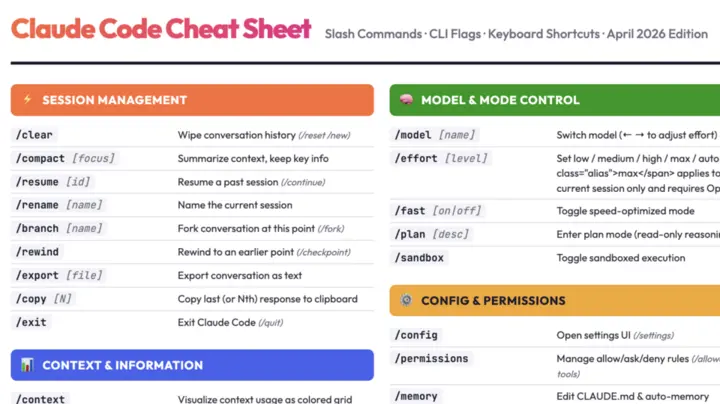
Claude Code is a different shape of tool. It runs in your terminal as an agent rather than a windowed editor. You describe a task, and it reads the codebase, writes changes across files, runs tests, and reports back. It works on your files directly, so it pairs with whatever editor you already use. We keep a full Claude Code cheat sheet covering every command, flag, and shortcut.
Features:
- Price: Subscription or usage-based
- Compatibility: macOS, Linux, Windows (terminal)
Pros:
- True agentic workflow across many files.
- Editor-agnostic; works on your repository directly.
- Strong at planning and running a whole task.
Cons:
- Command-line, not a visual editor.
- Cost scales with how much you use it.
6. JetBrains IDEs

JetBrains makes a family of IDEs: IntelliJ IDEA for the JVM, WebStorm for web work, PyCharm for Python, and more. They are heavier than VS Code but understand your code more deeply, which makes refactoring across a large project safer. The AI Assistant and the Junie agent now bring chat, generation, and task automation inside that same deep-indexing engine. For teams working on big codebases, the extra power earns its weight.
Features:
- Price: Paid, with free editions and trials; plans vary by product
- Compatibility: Windows, Linux, macOS
Pros:
- Deep code understanding and safe refactoring.
- Built-in testing, debugging, and version control.
- AI Assistant and Junie agent built in.
Cons:
- Heavyweight on resources.
- Full value needs a paid plan.
7. Sublime Text

Sublime Text is still the fastest way to open a file and start typing. It launches instantly, handles huge files without complaint, and its "Goto Anything" jump is a pleasure to use. It has less built-in AI than the newer editors, though plugins add Copilot-style help if you want it. Reach for it when you value speed and a clean workflow over an AI-first setup.
Features:
- Price: $99 one-time licence for individuals
- Compatibility: Windows, Linux, macOS
Pros:
- Very fast, even on large files.
- Clean and stable.
- Rich package ecosystem.
Cons:
- AI support is plugin-only.
- Paid licence for ongoing use.
8. Vim and Neovim

Vim, and its modern successor Neovim, give you a keyboard-driven editor that lives in the terminal. The modal editing model is hard at first and fast once it sticks. Neovim's plugin system now includes AI completion and agent integrations, so you keep the muscle memory and still get suggestions. It rewards the time you put in, which is why long-time users rarely switch.
Features:
- Price: Free
- Compatibility: Windows, Linux, macOS, and almost everything else
Pros:
- Extremely lightweight.
- Available on nearly every system.
- AI plugins available for Neovim.
Cons:
- Steep learning curve.
- Setup and configuration take effort.
9. Emacs

Emacs is less a text editor than a platform you write code inside. It bends to almost any workflow, from coding to email to task management, through its built-in language. AI packages now add chat and completion to that same extensible core. The learning curve is real, but few tools match what a tuned Emacs setup can do.
Features:
- Price: Free
- Compatibility: Windows, Linux, macOS, BSD
Pros:
- Endlessly customizable.
- One tool for many jobs.
- Strong, long-standing community.
Cons:
- Steep learning curve.
- Configuration takes time.
10. Notepad++

Notepad++ is the lightweight Windows classic that does one job well. It opens fast, highlights syntax for most languages, and stays out of your way. It has no built-in AI, so treat it as the tool you grab for quick edits rather than building a whole project. For a free, no-fuss editor on Windows, it is still hard to beat.
Features:
- Price: Free
- Compatibility: Windows
Pros:
- Light and fast.
- Simple and dependable.
- Open-source.
Cons:
- Windows only.
- No built-in AI.
Honorable Mentions
A few more tools are worth a look, depending on how you like to work.
Aider
Aider is a terminal AI pair programmer that edits your git repository and commits as it goes. It suits people who like the command line but want something lighter than a full agent.
JetBrains Fleet
Fleet is JetBrains' lighter, faster editor. It scales from a simple text editor up to a full IDE once you turn on its smart backend, so it suits anyone who wants JetBrains quality without the full IntelliJ weight.
The retired and the classics
Atom was shut down by GitHub in 2022, and Brackets is no longer maintained. Both shaped this category but are no longer safe picks. NetBeans and Eclipse still serve Java teams well, though they sit outside the AI-first wave.
Conclusion
The best editor is the one that fits how you want to work. If you want AI at the center, start with Cursor or Devin Desktop, or add Copilot to VS Code. If you want an agent that takes on a whole task, try Claude Code. If speed and control matter more to you than AI, Sublime Text, Neovim, or a well-tuned Emacs still hold up.
For what it is worth, I spent years living in Vim, and these days I lean on VS Code with an AI agent for larger projects. The point is not which tool wins. It is which one disappears while you think.
These tools move fast. New agents and forks appear every few months, so check the current version and pricing before you commit. Whatever you pick, you can always view and analyze the source of any site you are working on right here.